Determining your curl type: how to get to know your curls better
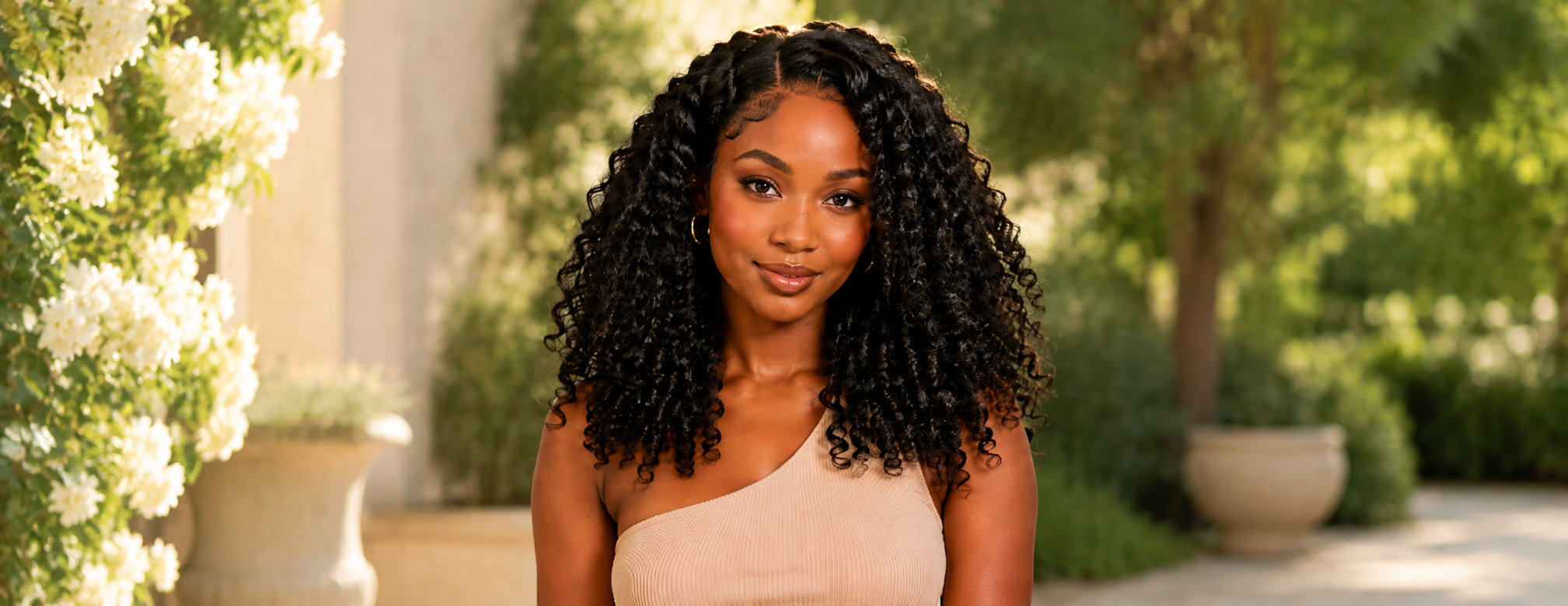
Determine your curl type: get to ant to take better care of your natural hair. You may have light waves that quickly lose their shape, defined curls that are prone to frizz or compact coils that need plenty of moisture. Although all these textures fall under the category of curly hair, they do not respond to hair care products and styling techniques in the same way.
The difference between waves, curls and coils mainly lies in the shape and compactness of the natural curl pattern. Waves usually have a loose, flowing shape. Curls form defined spirals or ringlets. Coils have a very compact pattern with small curls, bends or a zigzag shape.
By recognising your curl type, you can better determine how much moisture, hold and styling support your hair needs. A routine that works well for light waves may be too heavy for fine hair, while the same routine may not provide enough nourishment for dry coils. The goal is therefore not to place your hair into one fixed category, but to learn how to recognise what your curls need.
What is a curl type?
A curl type describes the pattern your hair naturally forms when it is clean, conditioned and has not been straightened. The commonly used curl typing system generally divides textured hair into type 2, type 3 and type 4.
- Type 2: wavy hair, commonly referred to as waves.
- Type 3: curly hair with defined spirals, commonly referred to as curls.
- Type 4: tightly curled or coily hair, commonly referred to as coils.
There are several variations within each group. Wavy hair can range from a very light bend to strong waves that almost resemble curls. Curls can be large and loose, but they can also be small and springy. Coils may have a clearly visible spiral pattern or feature sharp bends and a compact structure.
It is normal to have more than one curl pattern on your head. The curls around your face may be looser than those around your crown. The ends may also have a different pattern due to damage, frequent heat styling or chemical treatments.
How to recognise waves: the characteristics of type 2 hair
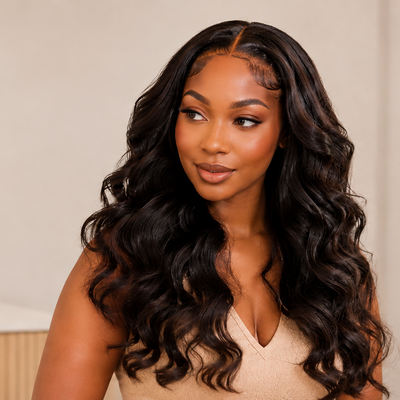
Waves usually form a soft or defined S shape. The hair often lies relatively flat near the roots and begins to wave further down the length. Some waves are barely visible when the hair is wet, while others become clearly visible immediately after washing.
Wavy hair can quickly become weighed down by rich creams, heavy butters and large amounts of oil. This can cause the waves to lose their shape and make the hair appear flat or greasy. At the same time, wavy hair can be prone to frizz, particularly when it is brushed while dry or does not receive enough conditioning.
A routine for waves usually consists of lightweight products. Begin with a gentle Curly Girl shampoo that cleanses the scalp and hair without unnecessarily drying out the lengths. Follow with a small amount of conditioner and apply it mainly to the lengths and ends.
A lightweight leave in product can help with detangling and reducing frizz. Use only a small amount when you have fine, wavy hair. Apply styling products to wet hair and gently scrunch the waves upwards. A lightweight gel or mousse often provides more hold than a rich cream.
How to recognise curls: the characteristics of type 3 hair
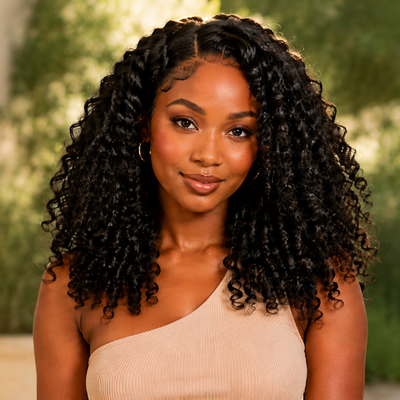
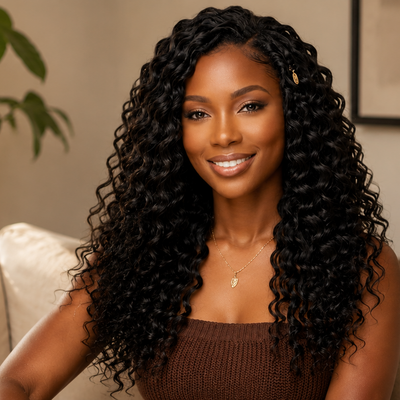
Curls form defined spirals, ringlets or corkscrew shapes. The pattern is usually visible from the roots or from the middle of the hair. Curls can be large and loose, but they may also be small, compact and highly springy.
Curly hair often needs a good balance between moisture and hold. Without enough conditioning, the curls can become dry, frizzy and less defined. When too many heavy products are used, the hair may lose its bounce and experience product build up more quickly.
After cleansing, a nourishing Curly Girl conditioner helps make the hair softer and easier to detangle. It is usually best to detangle your curls while the conditioner is still in the wet hair. Use your fingers or a wide tooth comb and work carefully from the ends towards the roots.
After rinsing out the conditioner, you can apply a leave in conditioner. This additional conditioning step helps keep the hair soft and may reduce frizz. Distribute the product evenly through your hair and pay extra attention to areas that feel particularly dry.
For more definition, apply a curl cream afterwards. The Taliah Waajid Curly Curl Cream is designed to define waves, curls and coils. Apply a suitable amount and divide your hair into sections when necessary, ensuring that every curl receives enough product.
How to recognise coils: the characteristics of type 4 hair
Coils have a compact curl pattern. The curls may consist of small spirals, sharp bends or a combination of both. Coily hair often experiences significant shrinkage as it dries. As a result, it may appear much shorter when dry than it does when wet or stretched.
Tightly curled hair is not automatically thick or strong. The many bends along each strand can actually make the hair more vulnerable. The natural oils produced by the scalp have more difficulty travelling towards the ends, which means that the lengths may feel dry more quickly. Careful detangling and sufficient moisture are therefore particularly important.
A good routine for coils begins with gently cleansing the scalp. Concentrate the shampoo mainly on the scalp and allow the lather to run through the lengths while rinsing. Vigorous rubbing is usually unnecessary and may create additional tangles.
After washing, use a nourishing conditioner that provides sufficient slip. Slip means that the strands can easily glide past one another during detangling. Divide the hair into sections and work slowly. Always begin at the ends and only move towards the roots once the lower sections are free from tangles.
A leave in conditioner can help the hair retain moisture for longer. You can then apply a curl cream to provide softness, shape and definition. Some coils respond well to a rich cream, while finer hair may require much less product. Begin with a small amount and only add more when your hair needs it.
How to determine your curl type
It is best to examine your curl type after washing and conditioning your hair, but before applying a large amount of styling product. Heavy products may stretch or conceal the natural pattern.
- Wash your hair with a gentle shampoo.
- Use a conditioner and carefully detangle the hair.
- Rinse out the conditioner and avoid applying heavy styling products.
- Allow the hair to air dry or dry it carefully with a diffuser.
- Examine the shape that the different sections of hair naturally form.
When you mainly see an S shape without complete spirals, you probably have waves. When the hair forms clearly defined, rounded spirals, it usually falls into the curls category. When the hair forms very small spirals, compact bends or a zigzag pattern, you probably have coils.
Examine several areas of your hair. Do not assess your curl type by looking at only one strand near the front. Look at the crown, sides, back and ends as well. It is completely normal to have a combination of strong waves and loose curls, for example.
Why your routine should match your curl type
There is no single curly hair product that works for everyone. What your hair needs depends on its curl pattern, but also on strand thickness, hair density and the condition of the lengths.
Waves often benefit from lightweight moisture and sufficient hold. Too much cream can stretch the pattern and make the waves appear flat. Curls usually need a combination of conditioning, definition and hold. Coils often require careful detangling, additional moisture and products that help the hair retain hydration.
The amount of product you need also varies. Someone with fine, wavy hair may only need a small amount of leave in conditioner. Someone with long, thick coils may need more product to condition every section evenly.
Use your curl type as a starting point rather than a strict rule. Pay particular attention to the result. When your hair feels heavy or greasy, use less product or select a lighter formula. When it feels dry and rough, add more conditioning or adjust the order of your routine.
Curl type is not the same as hair porosity
Your curl type tells you something about the shape of your hair, but it does not automatically tell you how easily your hair absorbs moisture. To understand this, you also need to consider hair porosity.
Hair with low porosity often absorbs moisture slowly. Rich products may remain on the surface of the hair more easily. Hair with high porosity usually absorbs moisture quickly, but it can also lose that moisture quickly. Damage caused by heat, colouring or chemical treatments may increase the porosity of the hair.
Two people with the same curl type may therefore need very different routines. One person may need lightweight products, while another may achieve better results with a richer conditioner and curl cream.
A simple routine for waves, curls and coils
Although the exact quantities will vary, you can use the same basic order for most curl types.
- Cleanse: remove dirt, oil and product residue with a shampoo that suits your scalp.
- Condition: use conditioner to make the lengths softer and easier to detangle.
- Moisturise: apply a leave in conditioner to wet or damp hair when additional moisture is needed.
- Define: use a curl cream to support the natural curl pattern.
- Add hold: apply a gel or mousse when you want the definition to last longer.
- Dry: allow the hair to dry gently and touch it as little as possible during the drying process.
Adjust the quantities to suit your hair. Waves usually need very little cream. Curls can benefit from an even layer of conditioning and styling product. Coils are often easier to style when the hair is divided into several sections.
Common mistakes when determining your curl type
A common mistake is trying to determine your curl type while the hair is damaged, stretched or heavily coated with products. These factors can make the natural curl pattern more difficult to recognise.
- Brushing the hair while dry before examining the pattern.
- Using too much heavy cream or oil.
- Assessing the pattern while the hair is still damaged from heat.
- Looking at only one strand and ignoring the rest of the hair.
- Selecting every product based on curl type without considering porosity.
- Expecting every strand to have exactly the same pattern.
Give your hair time when switching to a new routine. It may take several wash days before you can clearly see how your curls respond to different products and techniques.
What is your curl type?
Waves usually form an S shaped pattern and often need lightweight products. Curls form defined spirals and generally respond well to a combination of moisture, definition and hold. Coils have a compact pattern and often need additional attention during moisturising and detangling.
Determining your curl type can help you select products more effectively, but your own experience remains the most important factor. Pay attention to how your hair feels, how quickly it becomes weighed down and how long the definition lasts. By testing different quantities and techniques, you can discover which routine works best for your hair.
Frequently asked questions about determining your curl type
Below you will find answers to frequently asked questions about waves, curls, coils and creating a suitable hair care routine.
Can you have more than one curl type?
Yes, it is completely normal to have more than one curl type on your head. You may have waves around the crown and more defined curls underneath, for example. Adjust your styling method for each section when necessary.
Can your curl type change?
Your curl pattern can change due to hormones, age, heat, hair damage and chemical treatments. The length and weight of the hair may also cause curls to appear looser.
Should you choose products based on your curl type?
Your curl type is a useful starting point, but you should also consider porosity, strand thickness, density and damage. These characteristics also influence how much moisture and hold your hair needs.
Do waves need a curl cream?
A curl cream can be used on waves, but begin with a very small amount. Fine or lightly wavy hair is more easily weighed down. A lightweight mousse or gel may sometimes provide a better result.
Do coils need more product than curls?
Coils do not automatically require more product. The right amount also depends on the length, density and thickness of the hair. Distribute the product in sections and add more only when certain areas still feel dry.
How often should you wash curly hair?
There is no fixed washing frequency that suits every curl type. Wash your hair when your scalp feels dirty, oily or uncomfortable. Visible product build up is also a sign that it is time to cleanse the hair thoroughly.
Where can you buy products for waves, curls and coils?
At A&F Cosmetics, you can find a variety of products for caring for and styling wavy, curly and coily hair. Choose products based on your curl type, porosity and the amount of conditioning your hair needs.